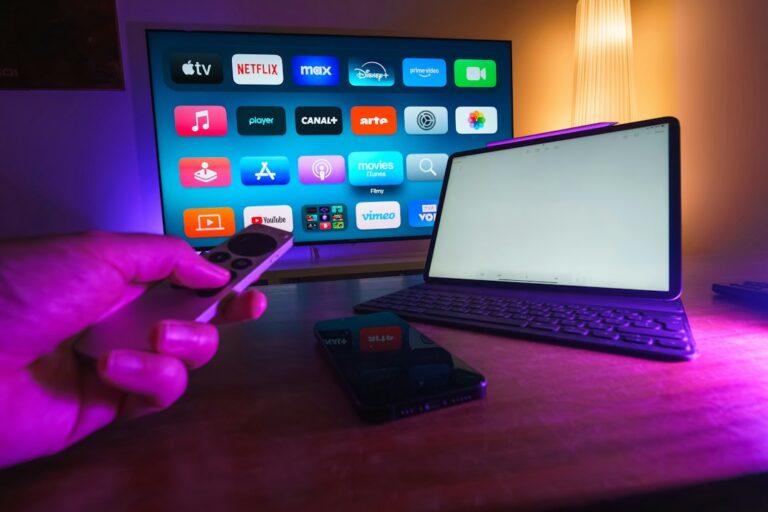
From Stadium Pitch to Your Living Room Screen
Saturday afternoon arrives. Millions of fans across Britain sit down to watch a Premier League live stream on their chosen device. Behind that smooth high-definition broadcast sits a massive technical operation spanning dozens of countries.

Cameras track every kick from multiple angles at grounds like the Emirates or Anfield. That raw video feed does not just magically appear on your Smart TV. It travels through high-capacity fibre optic cables, satellite uplinks, and complex contribution networks before reaching production hubs.
The Role of Content Delivery Networks
Broadcasters rely heavily on Content Delivery Networks to push massive video files out to millions of concurrent viewers without crashing. Instead of every single user downloading data straight from one single server, traffic gets distributed across edge servers situated close to major UK population centres like London, Manchester, and Glasgow.
When you fire up your app for a weekend fixture, you connect to a local node. That setup cuts down latency and prevents buffering spikes when a late penalty goes in.
Encoding and Bitrates Explained
Raw camera footage is far too heavy for standard home broadband connections. Engineers compress the video using modern codecs like H.264 or HEVC before it ever touches the internet. Variable bitrates adjust picture quality on the fly based on your current connection speed.
If someone starts downloading a large file on your home Wi-Fi network mid-match, the stream automatically dials down the resolution for a few seconds to keep things from freezing entirely. You might notice a slight drop in crispness, but the game keeps playing.
Official Rights Holders and UK Delivery
Sky Sports, TNT Sports, and Amazon Prime Video split the official domestic package in the UK. Each broadcaster builds its own delivery architecture, mixing traditional cable feeds with dedicated app-based streaming platforms.
If you want a deeper look at how official matchday setups work, check out our guide on how to pick a legal UK IPTV provider for Saturday 3PM football. Understanding these official pipelines helps you separate licensed distribution from unofficial sources.
Future Trends in Matchday Streaming
Ultra-high-definition broadcasts and high frame rate feeds are becoming standard practice for marquee fixtures. Delivering 50 frames per second requires double the bandwidth of traditional standard feeds, but the result removes motion blur when the ball travels fast across the pitch.
As fibre rollouts reach more rural parts of the UK, buffering issues will drop even further. The technology behind your weekend football fix continues to evolve every single season.
For more information, iptv.
Related reading
- Understanding IPTV UK: A Complete Guide to Internet Television Technology
- How to Organise Custom Channel Groups in Smart TV IPTV Apps
Update: Choosing the Right Smart TV IPTV Players for Your Living Room Setup
Update: Decoding Bitrates: What Your IPTV UK Setup Really Needs for Live Sports