- 1. Licensing and Copyright Compliance for IPTV UK Viewers
- 2. Bandwidth Standards and Network Stability for IPTV Service UK Content
- 3. Delivery Protocols and Video Compression Standards
- 4. Device Compatibility for UK IPTV Subscription Setup
- 5. Regulatory Standards and Ofcom Guidelines
- 6. Content Distribution Rights and Blackout Regulations
- 7. TV Licensing Obligations for Live IPTV UK Streaming
- 8. Hardware and Home Network Optimisation
British television consumption has shifted dramatically toward internet protocol delivery over the past decade. Traditional terrestrial aerials and satellite dishes are rapidly giving way to direct internet streaming. If you are exploring how to watch live channels over your broadband connection, understanding how an IPTV UK framework operates is essential for both picture quality and peace of mind.

Internet Protocol Television refers strictly to the method of broadcasting television programming over telecommunication networks using internet protocol suites. Major UK broadcasters like the BBC, ITV, and Sky rely heavily on internet distribution to reach millions of households. However, navigating the modern television marketplace requires a clear grasp of delivery standards, legal compliance, and network requirements.
1. Licensing and Copyright Compliance for IPTV UK Viewers
Legality remains the single most important factor when evaluating any streaming subscription. In the United Kingdom, broadcasting rights are strictly controlled through territorial licenses. Genuine legal IPTV service providers purchase distribution rights from rights holders, sports leagues, and film studios. These permissions allow them to broadcast linear channels and video-on-demand content legally to UK residents.
Unauthorised providers operate without these licensing agreements. Using illicit services exposes consumers to significant security risks, abrupt service shutdowns, and legal liabilities. The UK Intellectual Property Office works closely with law enforcement and internet service providers to block illegal streaming networks at the server level. According to the UK Intellectual Property Office, protecting digital copyright ensures that creative industries remain funded and secure.
To verify if an internet television package is legitimate, examine the provider’s corporate details and pricing. If a provider offers thousands of premium pay-TV channels and international sports packages for a fraction of standard market rates, it is almost certainly operating without permission. Legitimate providers clearly state their licensing terms, display registered UK company numbers, and provide clear terms of service.
2. Bandwidth Standards and Network Stability for IPTV Service UK Content
High-definition and 4K ultra-high-definition video streams require substantial, steady internet speeds. Unlike standard web browsing, live streaming cannot tolerate intermittent drops in connection speed without showing visible artifacts or spinning load icons.
For standard definition content, a stable connection of 5 Mbps is usually adequate. High-definition (1080p) streams require at least 15 Mbps, while 4K UHD streaming demands a minimum sustained download speed of 25 Mbps to 50 Mbps. If multiple devices in your home share the same connection, your total broadband capacity must account for that cumulative traffic.
| Video Resolution | Minimum Recommended Speed | Ideal Broadband Line Rate |
|---|---|---|
| Standard Definition (SD) | 5 Mbps | 10 Mbps |
| High Definition (HD 1080p) | 15 Mbps | 30 Mbps |
| Ultra High Definition (4K UHD) | 30 Mbps | 60+ Mbps |
Network latency and jitter also impact stream playback. High latency creates long delays between the live broadcast and what appears on your screen. Jitter causes micro-stutters during high-action sporting events. Connecting your streaming device via a physical Ethernet cable rather than Wi-Fi dramatically reduces packet loss and eliminates local signal interference.
3. Delivery Protocols and Video Compression Standards
Modern internet television relies on complex compression algorithms and delivery mechanisms to transport live signals across public internet infrastructure. Understanding these backend technologies helps explain why picture quality varies significantly between platforms.
Most commercial providers use HTTP Live Streaming or Dynamic Adaptive Streaming over HTTP. These protocols break video files into small sequential chunks, typically two to six seconds long. Your device downloads these chunks continuously while playing the video. If your network speed drops, adaptive streaming automatically lowers the video resolution slightly to prevent the stream from stopping entirely.
Video compression formats have evolved rapidly. Advanced codecs allow providers to deliver higher resolution imagery using lower data rates:
- H.264 (AVC): The legacy standard widely supported on older smart TVs and legacy streaming boxes.
- H.265 (HEVC): Compresses data roughly 50% more efficiently than H.264, enabling 4K HDR streaming without consuming excessive bandwidth.
- AV1: An open-source, highly efficient codec increasingly adopted by major platforms for smooth playback on lower-speed mobile connections.
Proper integration of these codecs allows licensed providers to maintain crisp visual fidelity even during peak internet usage hours across the UK.
4. Device Compatibility for UK IPTV Subscription Setup
A major advantage of internet protocol television is flexibility across hardware platforms. Unlike traditional satellite or cable packages that locked consumers into proprietary set-top boxes, modern internet delivery supports a wide spectrum of connected equipment.
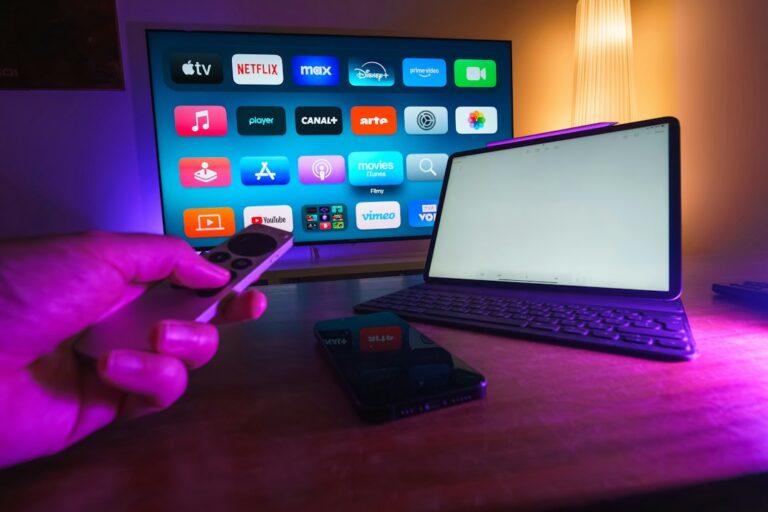
If you prefer a direct setup on a modern display, learning how to set up IPTV on your Smart TV in the UK allows you to install official broadcast applications directly from integrated app stores. Modern smart operating systems like Google TV, webOS, and Tizen handle media decoding easily.
Dedicated media streaming sticks and boxes often offer faster processors and frequent software updates. Devices running Android TV, Fire OS, or tvOS handle high-bitrate video feeds efficiently. Furthermore, software updates on dedicated hardware tend to continue long after smart television manufacturers stop updating older display models.
5. Regulatory Standards and Ofcom Guidelines
Broadcasting within the UK must comply with rigorous regulatory standards. Media regulator Ofcom oversees communications, television standards, and online safety across England, Scotland, Wales, and Northern Ireland.
Legitimate internet television platforms must adhere to strict guidelines concerning content classification, watershed rules, and advertising frequency. These rules protect consumers from harmful content and ensure accurate, balanced news reporting. Regulated platforms also offer robust parental control settings, allowing account holders to set PIN codes or restrict access to specific age ratings.
Unlicensed services ignore these standards entirely. They carry no watershed restrictions, offer zero consumer support, and lack access safety tools for families.
6. Content Distribution Rights and Blackout Regulations
Sports rights represent one of the most complex areas of broadcast licensing in the UK. Sports organizations sell broadcast permissions on a territory-by-territory basis to maximize revenue and preserve match attendances.
A clear example is the traditional Saturday 3:00 PM blackout rule. Under UEFA Article 48, live football matches cannot be broadcast in the UK between 2:45 PM and 5:15 PM on Saturdays. This long-standing policy encourages physical attendance at stadium matches across lower leagues. To understand more about match rights and broadcast laws, review our guide covering factors for watching Premier League football via IPTV UK services legally.
Legitimate platforms respect these territorial restrictions using geo-blocking mechanisms. They match user IP addresses against geographical databases to ensure streams are delivered only to eligible viewers inside licensed regions.
7. TV Licensing Obligations for Live IPTV UK Streaming
A common misconception among UK households is that switching from traditional aerial television to internet streaming eliminates the need for a TV Licence. This is incorrect under UK law.
Under the Communications Act 2003, you must hold a valid TV Licence if you watch or record live TV programmes on any channel, regardless of the transmission method. This applies equally to terrestrial aerials, satellite dishes, cable connections, and internet streams. Furthermore, a licence is mandatory if you download or watch any programmes on BBC iPlayer.
According to official guidance from TV Licensing, the law covers live broadcasts across all digital platforms, including laptop screens, smart TVs, mobile phones, and set-top boxes. If you only watch on-demand movies or non-BBC catch-up programmes after they have finished airing, a licence is not required. However, the moment you tap into a live stream broadcast on an IPTV UK feed, legal licensing requirements apply.
8. Hardware and Home Network Optimisation
Even the best official streaming package will struggle if your local home network is misconfigured. Wireless networks in typical homes face multiple physical obstacles, including brick walls, electrical interference, and congested Wi-Fi channels.
To ensure steady streaming performance, consider these practical network improvements:
- Use Ethernet connections: Run a direct Cat6 cable from your router to your primary streaming device to guarantee maximum throughput and zero wireless dropouts.
- Upgrade to Powerline adapters: If running long network cables is impractical, Powerline adapters route internet signals through your home’s existing electrical wiring.
- Utilise 5 GHz or Wi-Fi 6 bands: Standard 2.4 GHz wireless networks suffer heavy congestion from household appliances. Switch your streaming box to the less crowded 5 GHz band.
- Enable Quality of Service (QoS): Configure your broadband router’s QoS settings to prioritize video traffic over background file downloads or software updates.
For more detailed technical insights on streaming equipment and protocol configurations, read our detailed guide on things to know about IPTV UK services and streaming technology.
By assessing infrastructure requirements, verifying licensing credentials, and maintaining proper TV Licensing compliance, you can build a reliable digital entertainment setup that delivers consistent picture quality across all your connected home screens.
For more information, iptv.
Learn more on Wikipedia: ITV (TV network).